The early bird gets the worm. Get ready for the coming season.
Improved Meyer Lemon Budwood
Improved Meyer Lemon Budwood
Δεν ήταν δυνατή η φόρτωση της διαθεσιμότητας παραλαβής
Citrus x limon.
Meyer lemon is believed to be a hybrid of lemon and orange parentage. The tree was brought to the United States from Beijing, China in 1908.
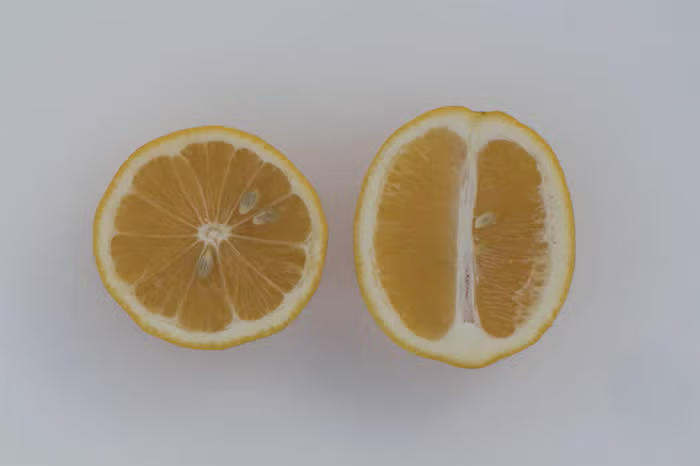
The tree is moderately vigorous and cold hardy, shrubby, and relatively small in size at maturity. It is an attractive garden tree. Meyer lemon flowers intermittently throughout the year, but the main season is in the spring. The fruit is medium-sized, short-elliptical, with a smooth, thin, yellow-orange rind. The flesh is light orange-yellow, moderately seedy, juicy, and acidic. The aroma and flavor of Meyer lemon is distinctive and many find it especially desirable. The original Meyer lemon introductions were symptom less carriers of the tristeza virus, but the Improved Meyer lemon trees now available are virus-free.
Fruit medium in size, oblong to short elliptical, sometimes faintly ribbed; base rounded, sometimes faintly necked and radially furrowed; apex rounded or with low, broad nipple. Rind thin, soft; surface very smooth; tightly adherent; color yellowish-orange to orange. Segments about 10; axis small and solid. Flesh color light orange-yellow; tender, very juicy; lemon-flavored and acid. Moderately seedy. Crop distributed somewhat throughout the year but mainly in winter.
Tree moderately vigorous, small to medium in size, spreading, nearly thornless, hardy, and productive. Flowers and new shoot [sic] purple-tinted. More or less everflowering but mainly in spring.
This fruit was found near Peking, China, by the plant explorer Frank N. Meyer of the U.S. Department of Agriculture and introduced in 1908. Because of its obvious resemblances to the lemon and its suitability as a substitute for that fruit, it has come to be known as the Meyer lemon.
The Meyer lemon compares favorably with the sweet orange for both cold and heat resistance and thus has a much wider range of climatic adaptation than either the common lemon or lime for which it is used as a substitute. The fruit is remarkably affected by climatic factors and differs greatly in appearance in different regions.
Rootstocks of accession: Yuma Ponderosa lemon.
Season of ripeness in the Riverside, California climate: Crop distributed somewhat throughout the year but mainly in winter.
Prepared by the Givaudan Citrus Variety Collection at The University of California Riverside.