The early bird gets the worm. Get ready for the coming season.
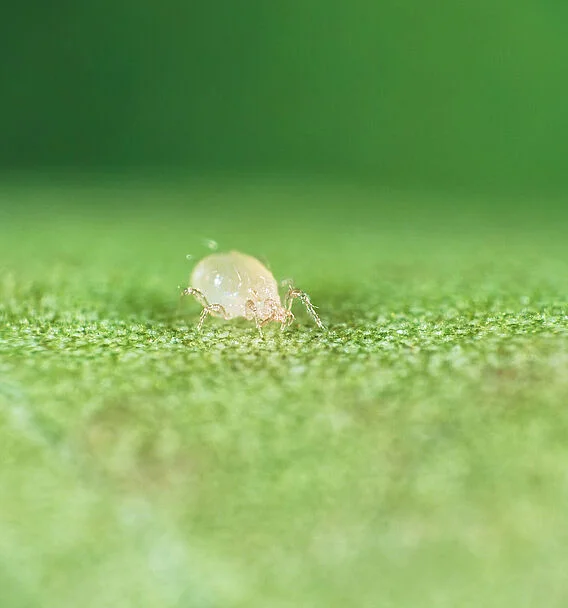
Anso Mite Predatory Mite
Anso Mite Predatory Mite
Impossible de charger la disponibilité du service de retrait
Scientific name: Amblyseius andersoni.
Phytoseiidae family of predatory mites which feed on agricultural pests thus used as a biological control agent for integrated pest management as natural enemies.
Use for:
- Young larvae of various thrips species.
- Eggs and larvae of whitefly.
- All stages of non webbing spider mites.
-
Rust mites.
Mode of action:
Predatory mites pierce their prey with their sucking mouthparts and suck out the inner contents.
Product specifications:
| Pack size | 125 000 predatory mites. |
| Presentation | 6 litre bucket. |
| Carrier | Bran. |
Application:
- Mix carefully by turning around the bucket a few times.
- Carefully sprinkle on the leaves.
- Make sure the material remains on the leaves for at least a few hours after releasing the predatory mites.
Dosage:
The dosage of Anso Mite depends on climate, crop and pest density and should always be adjusted to the particular situation. Start introduction preventively soon after planting the crop in pest prone areas. Introduction rates typically range from 50 to 250 predatory mites per m2/release. Releases should be repeated at least 3 times at weekly intervals or until control is achieved.
Environmental conditions:
- Amblyseius andersoni is effective at temperatures above 14°C / 57°F. Optimum temperatures are between 20°C and 28°C (68°F and 82°F).
- Amblyseius andersoni is sensitive to relative humidity below 65%.
-
Can survive on pollen or other prey.
Storage:
- Apply as soon as possible after receipt. If necessary, the product can be stored for 1 to 2 days.
- Store at temperatures of 10°C to 15°C / 50°F to 60°F.
- Store in the dark and provide ventilation to prevent CO2 accumulation.
Caution:
- Application of this product can cause sensitization or allergic reactions, take necessary precautions.
- Can be combined with Orius spp.. Do not combine with other generalist predatory mites like Amblyseius swirskii, Amblydromalus limonicus, Transeius montdorensis and Neoseiulus cucumeris.
- Pesticides can have direct or indirect effects on biological solutions.
- Do not use in tomato crops.
- Only use products that are permitted in your country or state and crop.