The early bird gets the worm. Get ready for the coming season.
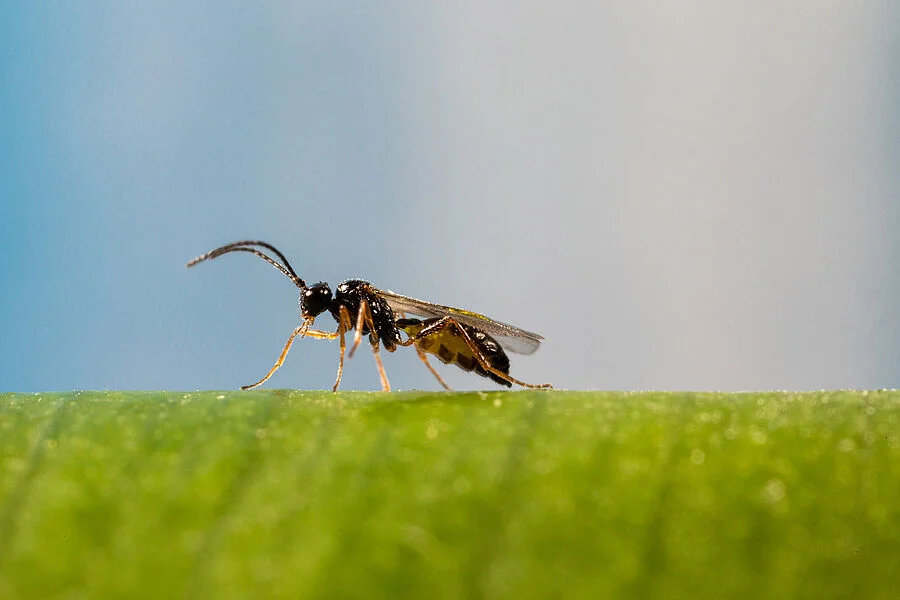
Ervipar Parasitic Wasp
Ervipar Parasitic Wasp
Couldn't load pickup availability
Scientific name: Aphidius ervi.
Aphidius ervi is a cosmopolitan parasitic wasp of the genus Aphidius. Many species of the small insects are endoparasitoids of aphids and used as biological pest control of aphids on agricultural crops. The female wasp lays eggs in a host aphid. When the eggs hatch, the wasp larvae feed on the inside of the aphid. Complete metamorphosis occurs within the host. As the larvae mature, the hosts die and become slightly enlarged or mummified, often becoming tan or yellow. As the larvae mature, the hosts die and become slightly enlarged or mummified, often becoming tan or yellow
Use for:
-
Especially for the control of large aphids like Macrosiphum spp., potato aphid (Macrosiphum euphorbiae), glasshouse potato aphid (Aulacorthum solani) and tobacco aphid (Myzus persicae var. nicotianae).
-
Can be used preventively or at first signs of pest presence.
- Can be used in greenhouse cultivation.
- Can be used in combination with other aphid biocontrol agents like predatory gall midges.
Mode of action:
Adult parasitic wasps emerge from the packaged mummies and females lay their eggs into aphids. The next generation of parasitic wasps develop inside the aphid, which converts into a leathery mummy. The adult parasitic wasp emerges through a hole at the rear of the mummy. The first mummies are noticed in the crop around 10 to 14 days after the first introduction.
Visually, parasitized aphids turn into a brown mummy.
Product specifications:
| Pack size | 250, 500, 5000 mummies. |
| Presentation | 100 ml bottle, 0.9 litre cardboard cylinder. |
| Carrier | Buckwheat hulls. |
Application:
- Spread the material on rock wool slabs or in application boxes.
- Make sure the material remains dry and is not moved from its introduction site for at least a few days.
Dosage:
The dosage of Ervipar depends on climate, crop and aphid density and should always be adjusted to the particular situation. Start introduction preventively soon after planting of the crop. Introduction rates typically range from 0.25 to 2 per m2/release. Releases should be repeated weekly during the period when aphid infestation is expected.
Environmental conditions:
Most effective between 20°C and 25°C / 68°F and 77°F. Not effective at temperatures above 30°C / 86°F.
Storage:
- Apply as soon as possible after receipt. If necessary, the product can be stored for 1 to 2 days.
- Store at temperatures of 8°C to 10°C / 47°F to 50°F.
- Store in the dark.
Caution:
- Pesticides can have direct or indirect effects on biological solutions.
- Only use products that are permitted in your country or state and crop.