The early bird gets the worm. Get ready for the coming season.
Bloody Milk Cap Inoculated Scots Pine
Bloody Milk Cap Inoculated Scots Pine
Precio habitual
$45.00 USD
Precio habitual
Precio de oferta
$45.00 USD
Precio unitario
por
Los gastos de envío se calculan en la pantalla de pago.
No se pudo cargar la disponibilidad de retiro
Scots pine plant, Pinus sylvestris, inoculated with bloody milk cap, Lactarius sanguifluus, spore.
Lactarius sanguifluus
-
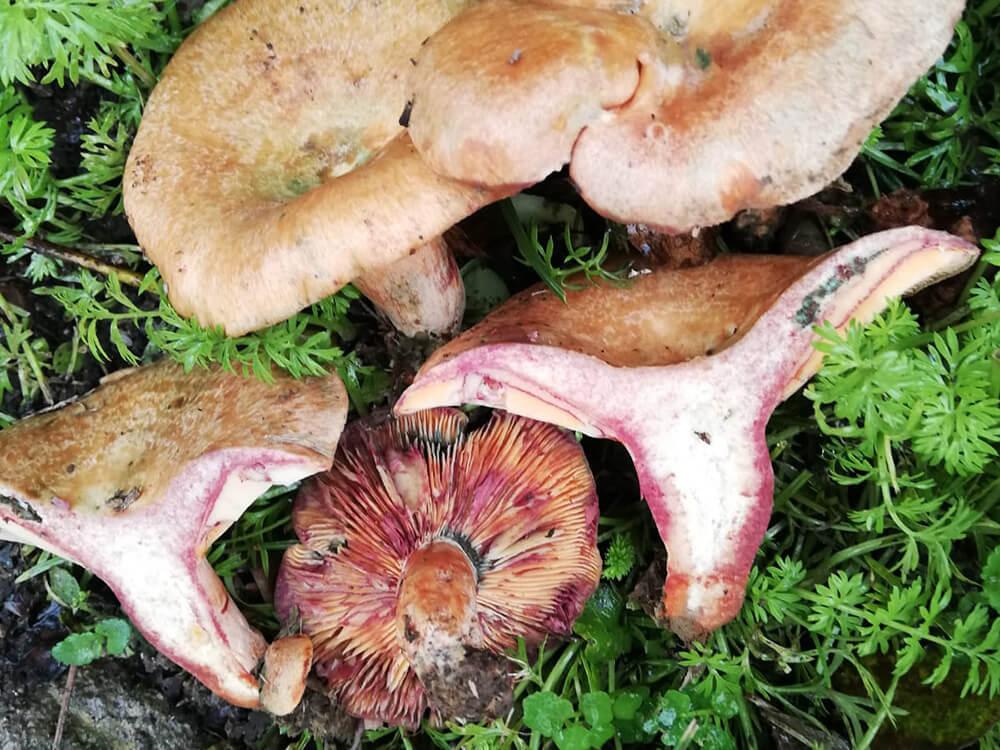
The caps are orangish to reddish brown, and become funnel shaped with age. The gills are pinkish to purplish. When bruised or cut, the fruit bodies ooze a blood red to purple latex that slowly turns greenish upon exposure to air.
- The mushrooms grow scattered or in groups on the ground under conifers.
- The flesh ranges from firm to fragile, its taste ranges from mild to slightly bitter, and it lacks any significant odour.
- An ectomycorrhizal species, Lactarius sanguifluus fruit bodies grow on the ground in association with pine trees on calcareous soils.
- This edible fungi keeps well, it hardens without spoiling.
- Fruit bodies can bioaccumulate heavy metals from polluted soil, do not eat if planted near roadsides.
Pinus sylvestris
- T he Baltic pine, European red pine, Scots fir, or European redwood can readily be identified by its combination of fairly short, blue green leaves and orange red bark.
- A n ancient species of coniferous tree, it can grow up to over 45 m tall on very productive sites.
- P inus sylvestris is the only pine native to northern Europe.
- In the north of its range, it occurs from sea level to 1000 m, while in the south of its range it is a mountain tree, growing at 1200 to 2600 m altitudes.
- The species is mainly found on poorer, sandy soils, rocky outcrops, peat bogs or close to the forest limit.
1 to 3 year old mycorrhizal seedling, produced in France, quality controlled by INRAE.