The early bird gets the worm. Get ready for the coming season.
Citrus Hystrix Kaffir Lime Papeda Budwood
Citrus Hystrix Kaffir Lime Papeda Budwood
No se pudo cargar la disponibilidad de retiro
Citrus hystrix.
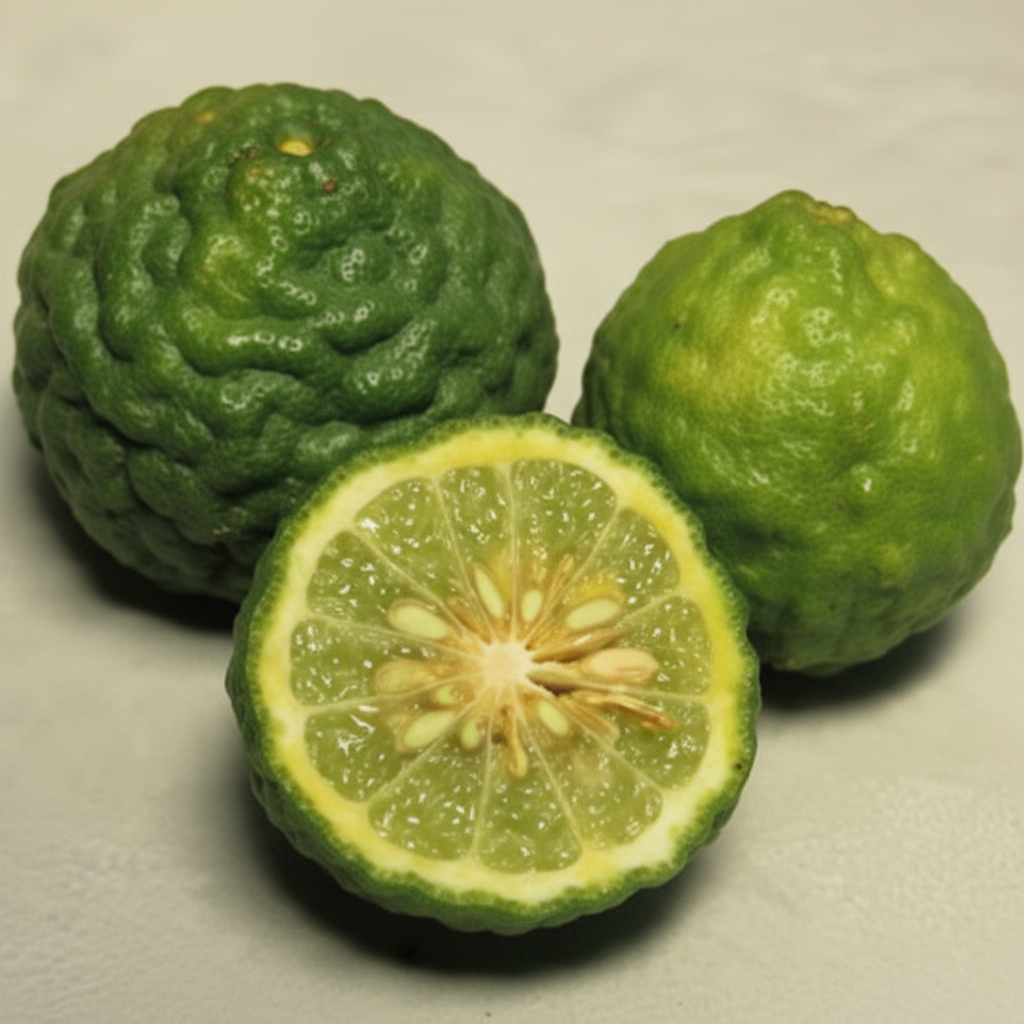
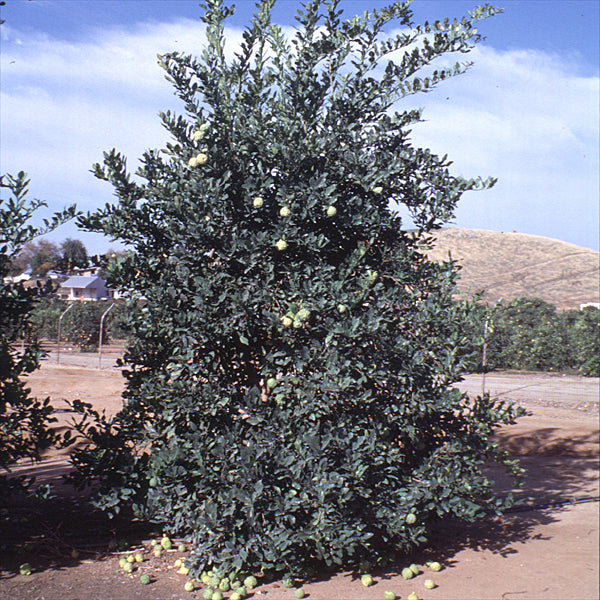
The tree is small and shrubby with distinctive leaves that have a petiole almost as large and wide as the leaf blade. It is these pungent leaves and not the fruit of this species that is commonly used in Thai and Indonesian cooking. The fruit is small, oval to short pyriform, and has an irregularly bumpy rind. In some places the fruit is used to make a shampoo that is insect repelling.
Low tree or shrub, 2-12 m high; trunk crooked, asymmetric or angular, rather thin, branched near the base; crown irregular, densely branched; branchlets thin, when young compressed-acutangular, when older terete, dark green, glabrous with scattered glandular dots, armed with axillary spines; spines short, stiff, subulate, green with hard brown or orange-coloured tips, obliquely erect, solitary, glabrous, 0.2-1 cm long. Leaves alternate or biseriate, stalked unifoliate, orbicular-ovate or ovate-oblong, lanceolate; base cuneate, obtuse or rounded, rarely subcordate, apex obtuse, rounded or obtusely acuminate, often notched; patently serrate-crenate, coriaceous, glabrous on both surfaces, above dark green, shining, beneath light green or yellowish-green, dull, densely pellucid dotted, fragrant when bruised, 3-15 cm long, 2.5-6 cm wide. Petiole from 0.3-0.5 cm above the base upwards with large, foliaceous wings; the winged part obovate or obcordate-oblong, with an acute, cuneote, obtuse or rounded base and an obtuse, truncate, rounded or slightly emarginate apex, patently crenate-exsculptate, coriaceous, above dark green, shining, beneath light green or yellowish green, dull, with scattered pellucid dots, including the wings 1-8 cm long, 1-4.5 cm wide, sometimes very similar to the leaf itself and not rarely for a greater or smaller part connate with it. Inflorescences axillary or terminal, dense, 1-5-flowered, glabrous. Flowers smallish, shortly stalked, 4-5-merous, fragrant, in bud globose, white, 0.5-0.7 cm diam.; pedicel terete, yellowish green, glabrous, 0.1-0.5 cm long. Calyx cupular, afterwards flat, 4-lobed, glabrous within and without, 0.2-0.35 cm diam.; lobes broadly ovate-triangular, acute or shortly acuminate, yellowish white with violet margins, ciliate, ±0.1 cm long. Petals 4-5, ovate oblong, with a narrowed base and a narrowed or acuminate, obtuse apex, yellowish white or tinged with red, glabrous, with scattered pellucid dots, 0.7-1 cm long, 0.3-0.5 cm broad. Stamens 24-30, quite free, 0.4-0.8 cm long, filaments thickened above the base, with a filiform apex, glabrous, 0.3-0.6 cm long; anthers elliptic-oblong, 0.15-0.25 cm long. Ovary depressed globose, glabrous, with a tuberculate-folded surface, 0.2-0.4 cm diam.; style short, robust, terete, glabrous, 0.1-0.15 cm long; stigma depressed globose, glabrous. Fruit pendulous, globose, ovoid or ellipsoid, with an abruptly contracted obtuse or rounded base and a rounded or slightly depressed apex, crowned by a short style-rest, very irregularly bumpy, glabrous, with many scattered glandular dots, when ripe yellow or yellowish green, feebly shining, 5-7 cm diam.; peel thick, its exterior layer of ±0.2 cm thickness, yellowish green, the inner part white; pulp yellowish green, very sour and slightly bitter, faintly fragrant; fruiting pedicel very short, 0.3-0.5 cm long. Seeds ovoid-oblong, 1-1.5 cm long, 0.5 cm thick; cotyledons and plumule white.
The fruits usually have 10 to 12 segments (rarely 13 or 14). The leaves are blunt-pointed, usually of medium size, 8 to 12 by 3 to 5 cm, more or less irregular at the tip and sometimes slightly emarginate. The margins are more or less crenate. The winged petiole, usually two-thirds to three-fourths as long as the leaf blade, is broadly rounded and blunt at the base, often subtruncate at the tip, often with more or less crenate margins.
The flowers are small, with short, entirely free stamens, as in all the other species in the section Papeda. The fruits are almost always bumpy or tuberculate. The pulp-vesicles were first described by Penzig (1887, pp. 131-32), who stated: "They are provided with a slender very long stalk which suddenly enlarges toward the free end, forming a small round or oval body pointed at the tip." Penzig noted that they differ from the pulp-vesicles of the other species studied by him in showing "a large amount of oil accumulated in their centers." This accumulation of numerous droplets of oil, often of a very strong and acrid flavor, is characteristic of all the species of the subgenus Papeda. The cotyledons are epigeous in germination.
Rootstocks of accession: CRC 1449 Citremon, Yuma Ponderosa lemon.
Season of ripeness at Riverside: Citrus hystrix is used primarily for its leaves and so it can be considered year-round. When the fruit reaches full maturity in late winter to early spring, the rind turns yellow and the fruit falls from the tree.
Prepared by the Givaudan Citrus Variety Collection at The University of California Riverside.