The early bird gets the worm. Get ready for the coming season.
Bianchetto Truffle Inoculated White Pine
Bianchetto Truffle Inoculated White Pine
Normaler Preis
$750.00 USD
Normaler Preis
Verkaufspreis
$750.00 USD
Grundpreis
pro
Versand wird beim Checkout berechnet
Verfügbarkeit für Abholungen konnte nicht geladen werden
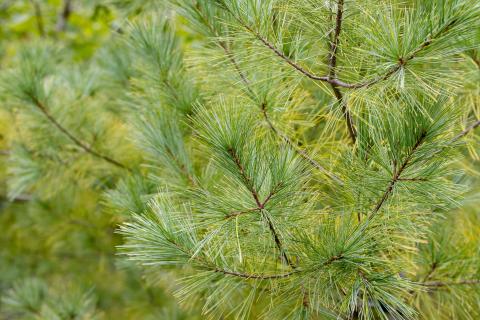
White pine plant, Pinus strobus, inoculated with bianchetto truffle, Tuber borchii, spore.
Truffles are edible mushroom species of the genus Tuber.
They are ectomycorrhizal fungi, found in close, mutually beneficial association with tree roots.
Spore dispersal is accomplished through fungivores, animals that eat fungi.
These fungi have ecological roles in nutrient cycling and drought tolerance.
Tuber borchii
- The whitish truffle or bianchetto truffle is a small, common species, 1 to 3 cm in size, rounded and often irregular in shape.
- The exterior is slightly velvety and white at first, and when mature it has a smooth, reddish ochre surface with brown markings.
- The interior is whitish when young, light ochre or pinkish brown with age.
- Young specimens give off a pleasant smell, but when mature they give off an unpleasant smell.
- Whitish truffles often grow in oak groves, and less frequently under conifers.
- Fruiting bodies are borne from winter to early summer, in coastal or low lying areas.
- T. borchii is highly adaptable to different environments although it prefers calcareous sandy soils typical of coastal areas.
- It also bears fruit in T. melanosporum habitat at higher altitudes.
- It grows well in soils with a pH of 7 to 8, as well as in sub alkaline soils with a pH of 6 to 7, occasionally in soils with a pH as low as 5.2.
- The bianchetto truffle fruits early in new plantations, as early as 4 years in pine, is adaptable to different ecological niches, and is not extremely specific to host plants.
Pinus strobus
- The eastern white pine, northern white pine, Weymouth pine, or soft pine is a large pine native to eastern North America, growing about 1 m annually between the ages of 15 and 45 years, with slower height increments before and after that age range.
- It achieves highest abundance on well drained or sandy soils and in humid climates, but can also grow in boggy areas and rocky highlands.
- It provides food and shelter for numerous wild animals.
- Because the eastern white pine tree is somewhat resistant to fire, mature survivors are able to reseed burned areas.