The early bird gets the worm. Get ready for the coming season.
Temple Tangor Mandarin Budwood
Temple Tangor Mandarin Budwood
Не удалось загрузить сведения о доступности самовывоза
Citrus reticulata.
The Temple orange or the Royal mandarin. The tree is moderate in size and sensitive to cold. The fruit develops a satisfactory sugar to acid ratio only when grown in the warmest interior valleys. When grown in a suitable location, the fruit is large, usually subglobose, with a pebbled, reddish-orange rind. The flesh is orange-colored, tender, and juicy with a rich flavor. Medium to late in maturity.
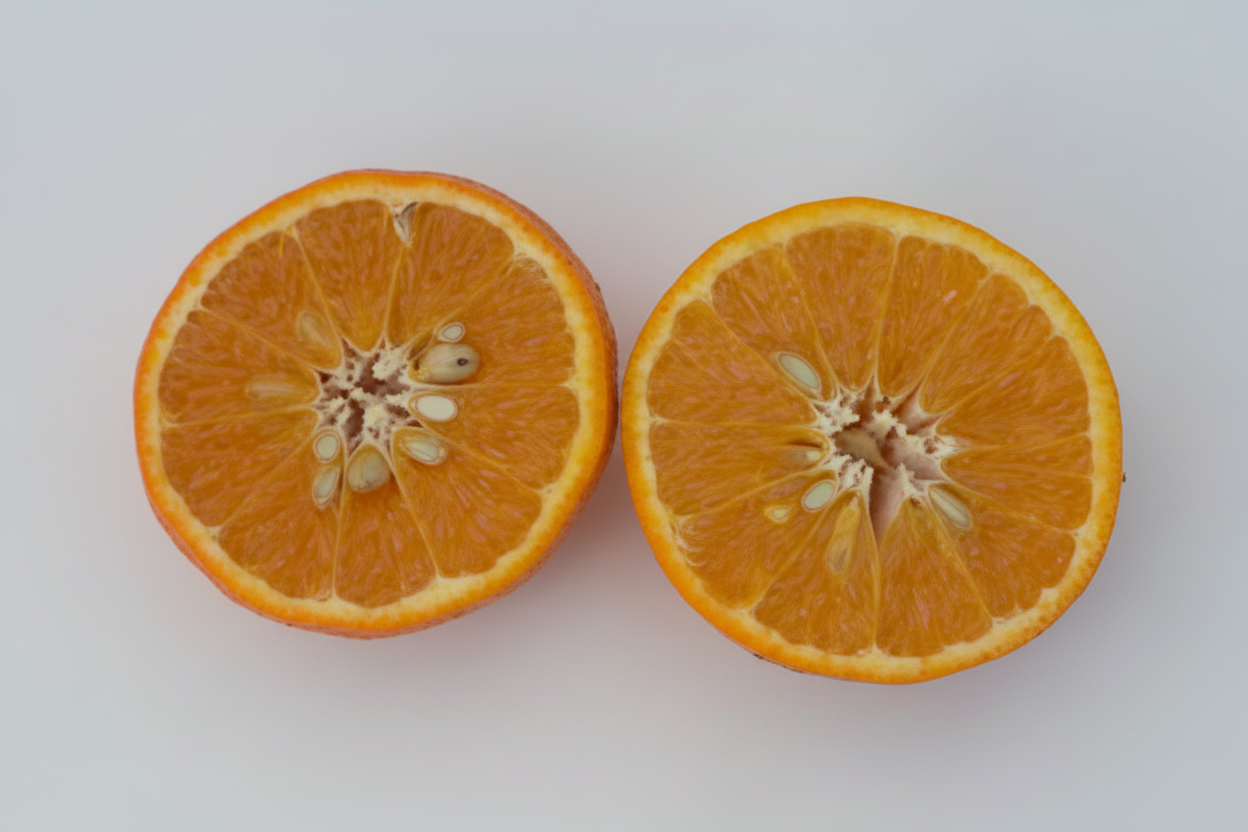
Fruit medium-large, very broadly obovate to slightly subglobose; sometimes with short, wrinkled, or furrowed neck; frequently with small, sometimes protruding navel; seedy. Rind color deep reddish-orange; medium-thick; surface somewhat pebbled or rough, and moderately adherent, but readily peelable. Segments 10 to 12 and axis mainly solid. Flesh orange-colored; tender, moderately juicy; flavor rich and spicy. Seed monoembryonic. Medium-late in maturity.
Tree of medium vigor, spreading and bushy, somewhat thorny; leaves medium-sized and mandarin-like; productive. More cold-sensitive than any of the mandarins or oranges.
Because of its high heat requirement and sensitivity to cold and both rootstock and soil influences, Temple is decidedly limited in its range of commercial adaptation. In this respect, it is somewhat similar to the King mandarin. Within its range of adaptation, the fruit is of outstanding attractiveness and quality, but elsewhere it is highly disappointing and commercially worthless. Temple is at its best in Florida when propagated on sour orange or Cleopatra mandarin rootstocks and grown on the heavier-textured soils.
Rootstocks of accession: Carrizo citrange, C-35 citrange.
Season of ripeness in the climatic conditions of Riverside, California: February to April.
Prepared by the Givaudan Citrus Variety Collection at The University of California Riverside.