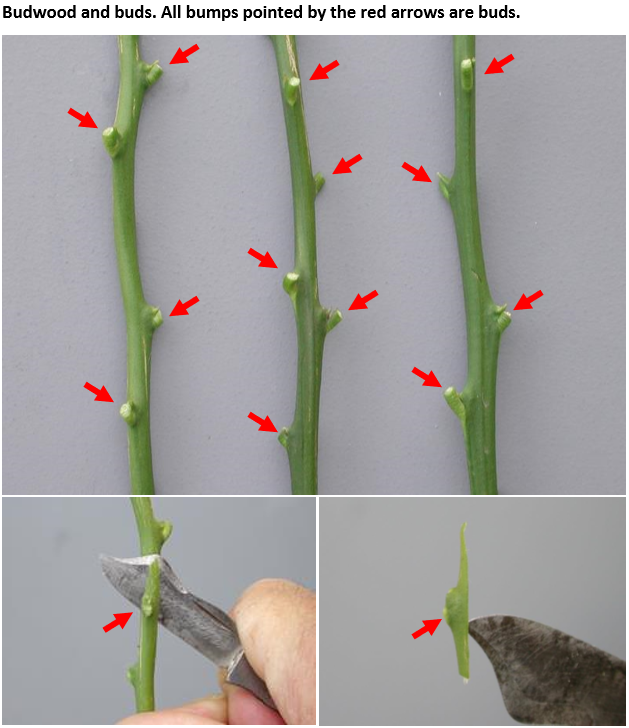
The early bird gets the worm. Get ready for the coming season.
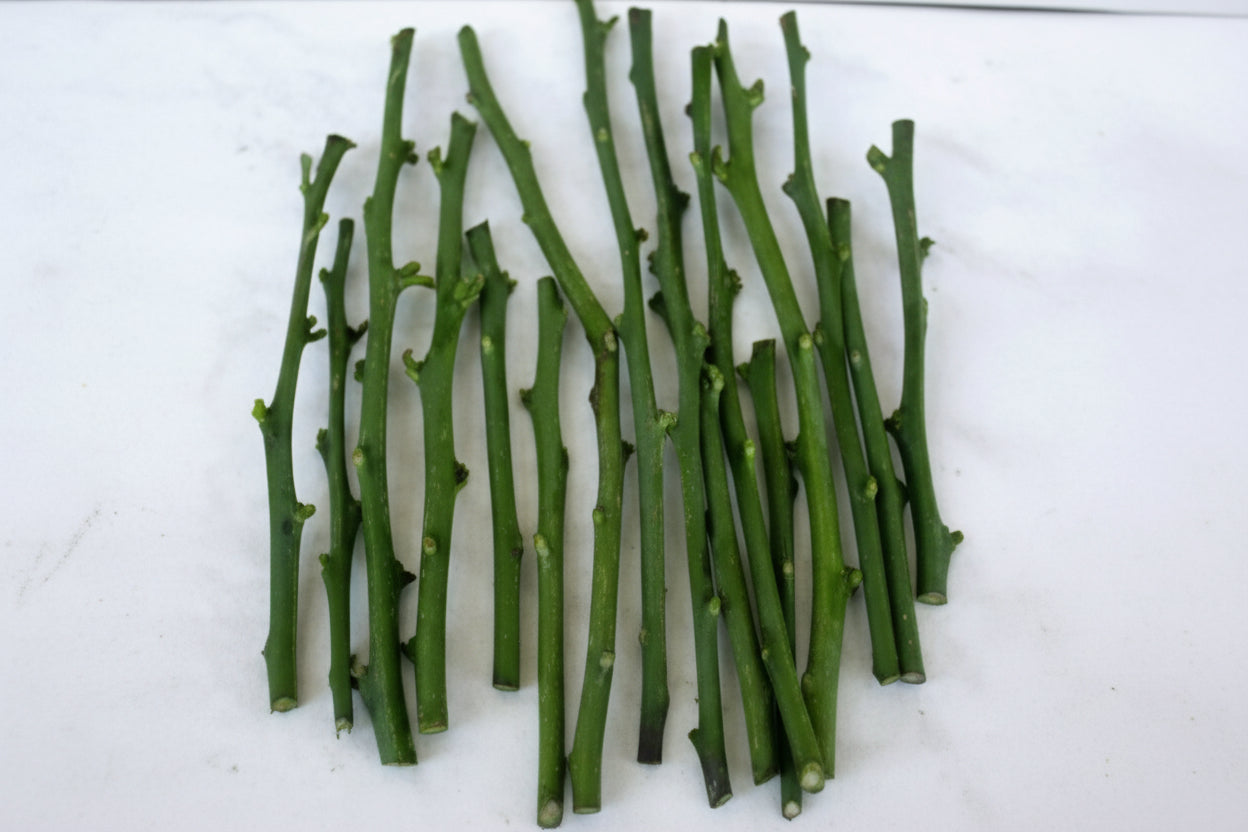
Buddha’s Hand Fingered Citron Budwood
Buddha’s Hand Fingered Citron Budwood
Couldn't load pickup availability
Citrus medica var. sarcodactylis.
The tree is small and shrubby with an open habit. It is very frost-sensitive. Citron leaves are distinctive in form, being oblong and somewhat rumpled, with serrate margins. The flowers and new leaves are heavily tinged with purple. The very small immature fruits may also be flushed with purple, so that they appear almost brown.
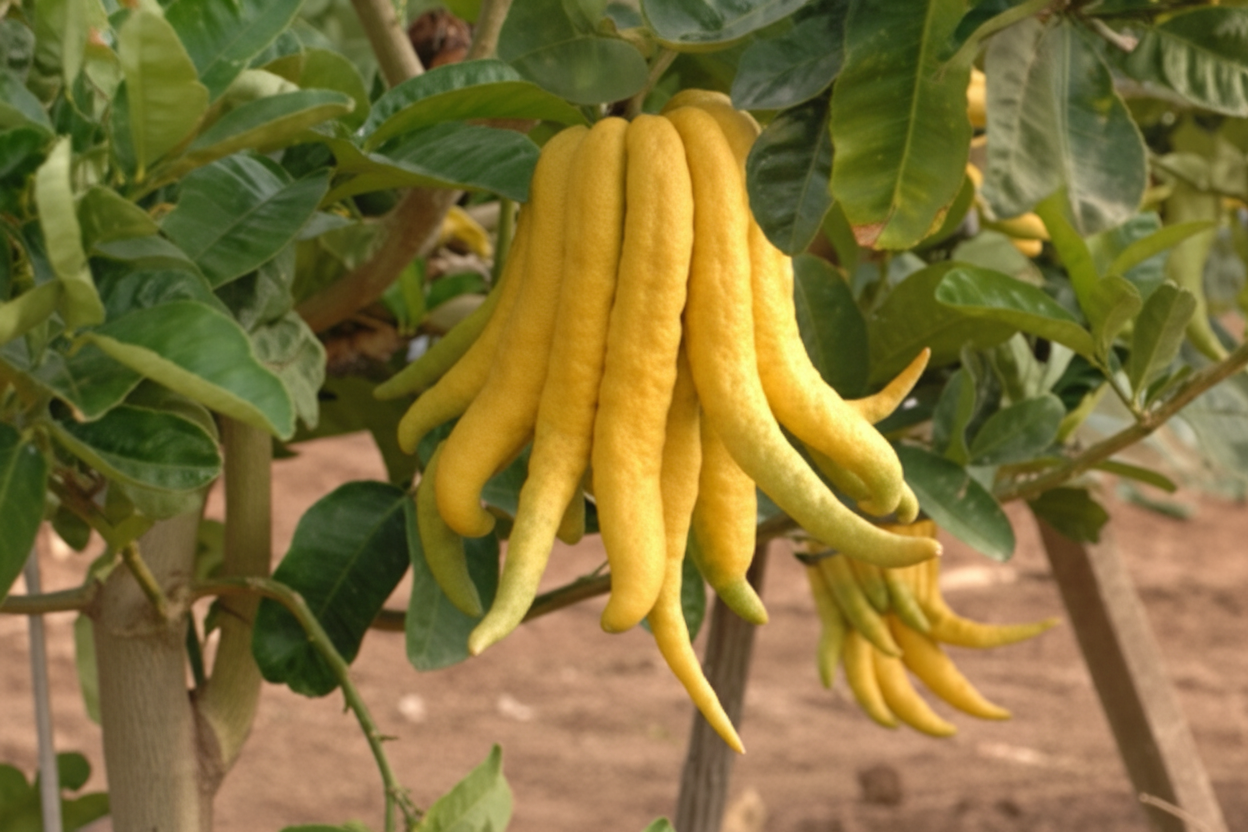
The 6- to 12-inch fruits split longitudinally at the end opposite the stem, as the carpels separate into segments that look somewhat like human fingers. The rind is yellow and highly fragrant at maturity, with a characteristic aroma of violets or osmanthus, largely derived from a compound called beta-ionone (Shiota, 1990). The interior of the fruit is solid albedo (the white part of the skin) with no juicy pulp or seeds. Fingered citron fruits usually mature in late fall to early winter and hold moderately well on the tree, but not as well as other citron varieties.
Yuma Ponderosa lemon and citremon may be used as rootstocks of accession. The main season of ripeness is November to January in the Californian latitude. Some yellow fruits appear year-round.
Although the Buddha’s Hand tree bears fruits that are different from other citrons in shape, it is otherwise a typical member of the species. It is usually considered as one variety in the United States, but in China there are actually at least a dozen named Buddha’s Hand varieties or subvarieties, differing in fruit shape, color and size, and the tree’s growing habit, etc. These varieties are classed in several types grown for specific purposes, such as fruit production or bonsai tree sales (Guo, 1993; Chen, 2002; Chen, 2003; Zhang, 2007).
In Yunnan a variety called “Muli” or “Xiangyanggo” has fruit characteristics intermediate between the common and the Buddha’s Hand citron (Wang, 1983; Gmitter, 1990). Along the same lines, Hodgson (see below) writes that in one clone “only part of the fruits are fingered and the rest are corrugated, lacking in flesh, and contain seeds hanging free in the locules.” There also exists a variegated form. Clearly the CVC accession (CRC 3768) is a standard Buddha’s Hand (no pulp, no seeds, no variegation), but its particular variety or subvariety has not yet been determined.
The fingered citron is well known and highly esteemed for its fragrance and beauty in China and Japan.
Prepared by the Givaudan Citrus Variety Collection at The University of California Riverside.