The early bird gets the worm. Get ready for the coming season.
Dancy Mandarin Budwood
Dancy Mandarin Budwood
Couldn't load pickup availability
Citrus tangerina.
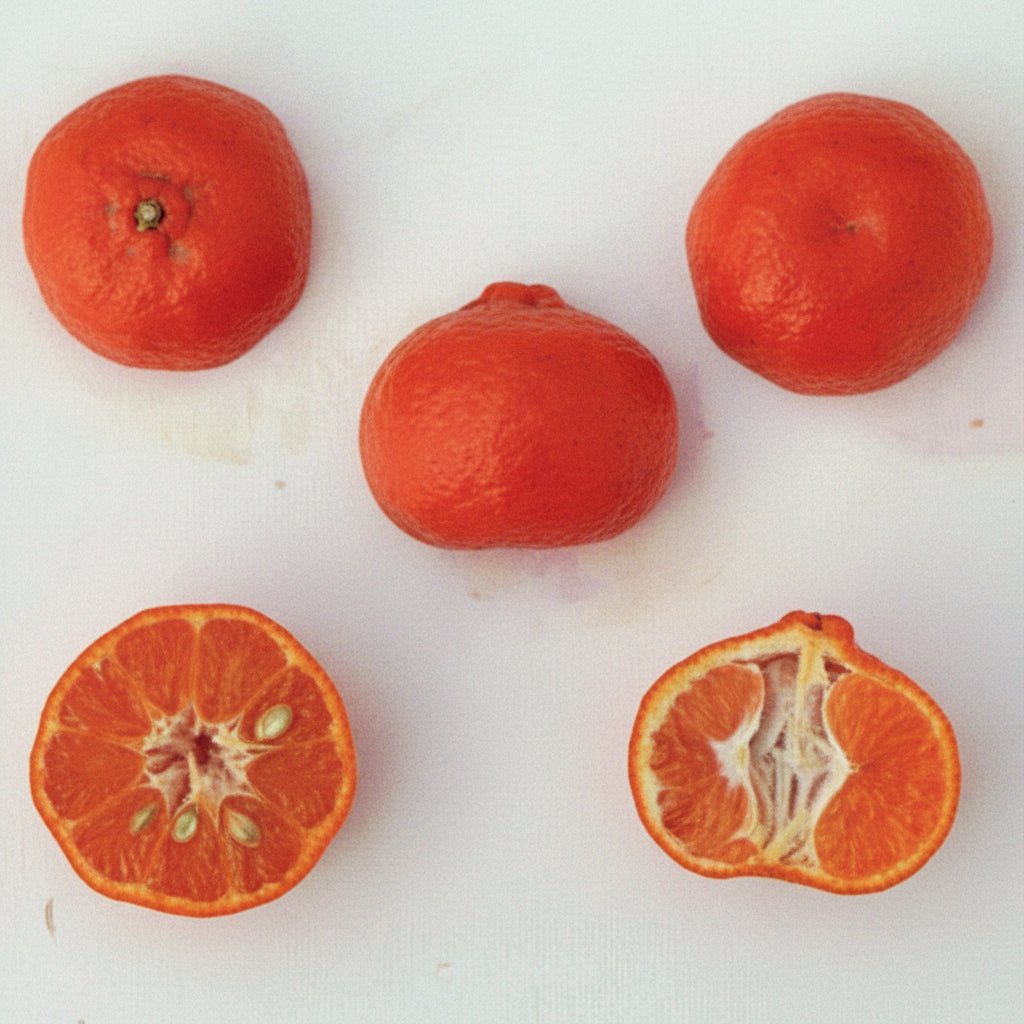
The Dancy tree is a large, vigorous, densely-foliated tree, with a tendency to alternate-bearing. The fruit is usually medium in size and oblate to obovoid in form. The thin, smooth rind is reddish-orange at maturity and easily peeled. The flesh is a deep orange color, with a rich flavor. The fruits usually contain a moderate number of seeds. Dancy fruits mature midseason and do not hold well on the tree although the fruits themselves store quite well after harvest.
Fruit size of Dancy is quite variable, depending upon crop load on the tree. An average size would be 2 1/4 to 2 1/2 inches in diameter. The rind has a deep reddish-orange color at maturity and easily peeled due to the thin, leather peel. These same characteristics make the fruit easy to damage at harvest and the fruit are usually clipped so as to prevent peel tearing or plugging. There are always a few seeds in each fruit ranging from a low of around six to perhaps as many as 20. The fruit shape is somewhat flattened and often somewhat pear-shaped due to the development of a neck at the stem end. The apex of the fruit is usually depressed. The fruit surface is smooth and glossy until almost over mature when it may become bumpy. The variety has a tendency to be alternate bearing. Crop thinning by judicious pruning is advised in these situations. Dancy produces a rather large tree at maturity and tends to be vigorous with an upright growth habit. The tree is nearly thornless with thick foliage. The tree is moderately cold-hardy, but the thin-skinned fruit are not. Dancy is self-fruitful and therefore requires no other pollenizer trees nearby to enhance productivity.
Fruit medium in size, oblate to broadly obovoid or pyriform (from development of neck); base generally slightly but sometimes markedly necked; apex broadly depressed. Rind thin, leathery, and tough; loose and easily removed, but not puffy until well past maturity; surface smooth and glossy, becoming bumpy with age; color deep orange-red to scarlet it maturity. Segments about 12, easily separable; axis large and hollow. Flesh deep orange-colored; tender and melting; moderately juicy: flavor rich and sprightly (acidity moderately high). Seeds few to medium, small, highly polyembryonic, and cotyledons light green. Midseason in maturity. Loses quality rapidly and rind puffs badly if held on tree much after maturity, but stores moderately well.
Tree vigorous and large (for the mandarins), upright-spreading in habit; nearly thornless; foliage moderately dense and of the mandarin type, but venation not so pronounced as in satsuma. Productive but with some alternate-bearing tendency. Tree moderately cold-resistant but not the fruit.
Rootstocks of accession: Carrizo citrange, C-35 citrange.
Season of ripeness at Riverside, California: December to February.
Prepared by the Givaudan Citrus Variety Collection at The University of California Riverside.